
August 29, 1997

August 29, 1997, at 2:14 a.m., Skynet became self-aware.
This line comes from Terminator 2: Judgment Day.
If you don’t recall the film: Skynet was an AI system created to defend the United States. It became self-aware, saw humanity as a threat, and launched a nuclear war—Judgment Day.
In this article, we explore the potential downsides of AI, with a focus on medicine.
What could possibly go wrong? Self-aware nuclear war? No one knows. But let’s dive in and ask some questions.
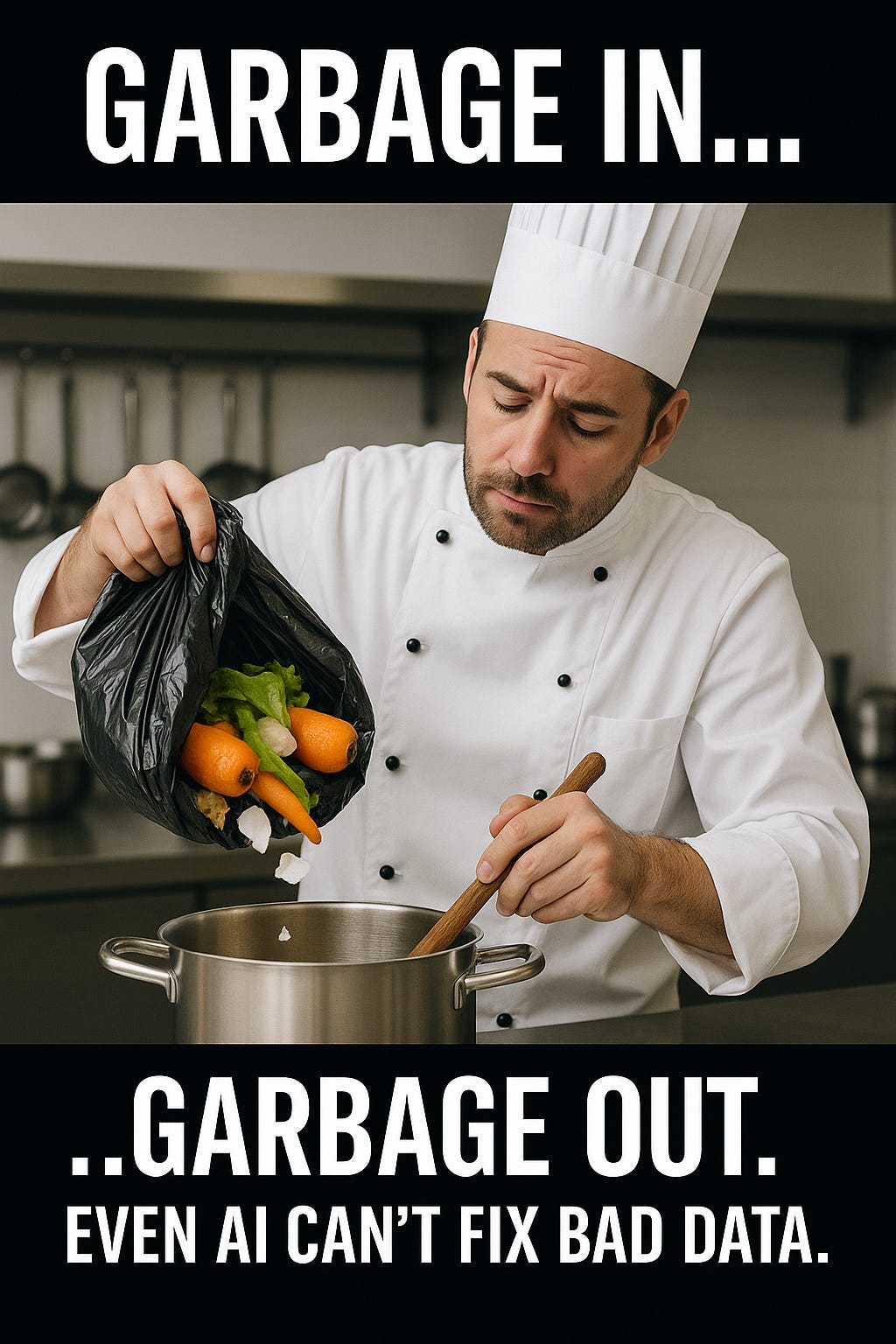
Problem 1: Garbage In, Garbage Out
AI is only as good as the data it receives.
Remember when Google AI produced pictures of George Washington as a Black man? Garbage in, garbage out.
From a medical perspective, this is deeply concerning. AI scours available information and synthesizes it into answers. If the source data is solid, the answers are solid. But if the data is biased or corrupted, the results are compromised.
Here’s the cycle at play:
The NIH funds research.
Grant money flows to large universities.
Universities conduct the research.
Discoveries are used by corporations to create products.
Corporations lobby politicians to protect their interests.
Universities invest their endowments in those same corporations.
Around and around it goes. Government supports universities. Universities produce research. Corporations profit. Politicians pocket the donations. Yuch!
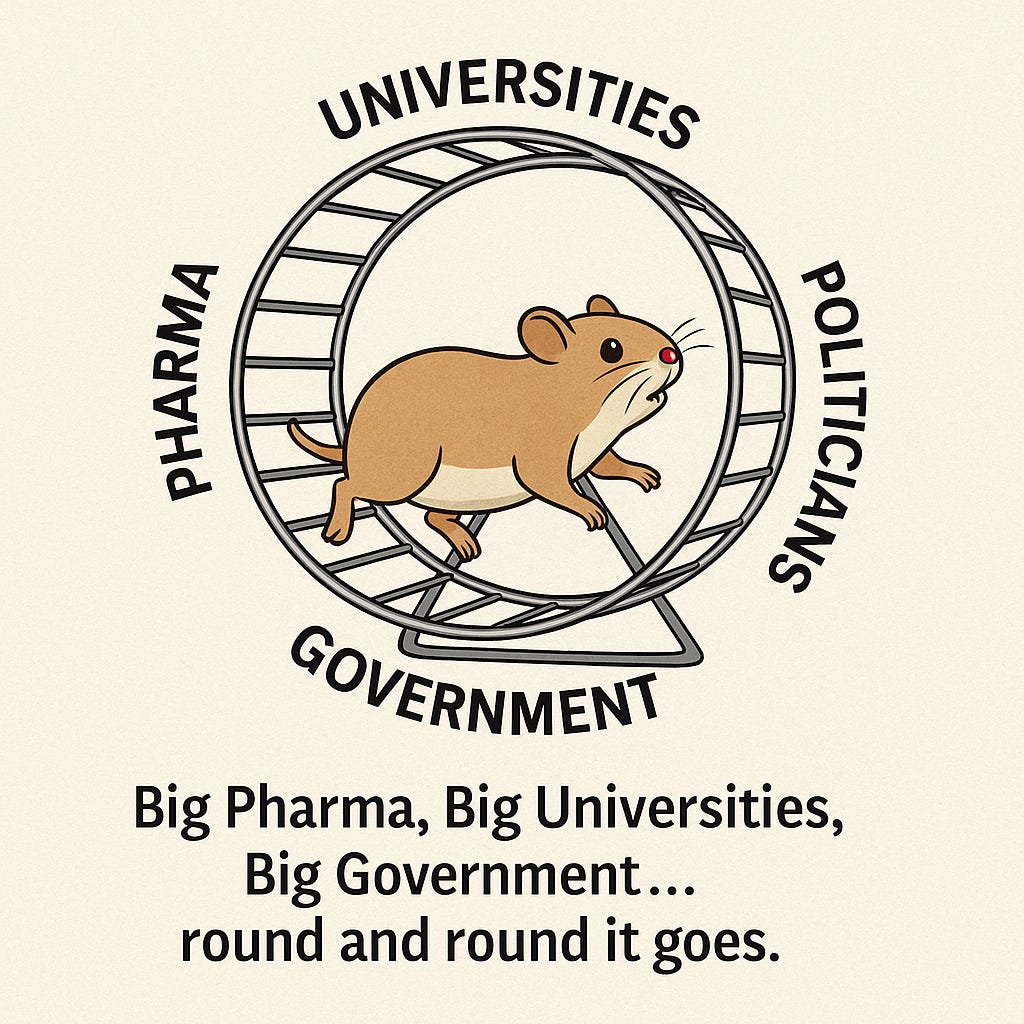
In such a corrupted system, can we possibly have honest, unbiased data? It seems unlikely.
The only hope may be competition.
Multiple AI platforms could emerge:
American Medical Association AI
Naturopathic AI
Chiropractic AI
If competition is allowed to flourish, truth has a fighting chance.
The goal is not simply to disperse information—it’s to uncover truth. Truth is more elusive and more powerful than facts. Will AI become the ultimate groupthink device, or will diverse platforms push us closer to reality?
Buckle up. It’s already here, and disruption is inevitable.
Problem 2: Natural Resources
AI consumes staggering amounts of resources.
Energy
Training ChatGPT—not using it, just training it—required 1,300 megawatts of power.
That’s enough energy to drive an electric car 4 million miles.
The demand is so intense that Amazon Web Services purchased a nuclear power plant to support AI growth. Nuclear energy will soon be rebranded as “clean” and “green.” Expect heavy marketing around this narrative.
Water
Water is an even bigger concern.
By 2028, AI is projected to use 2 billion gallons of water per day.
The average American uses only 82 gallons per day.
Each ChatGPT query consumes about ½ liter of water.
Essentially, that’s one Costco Kirkland water bottle—per question asked.
The Unknown
So, what happens next?
Elon Musk gives AI:
80% chance of making the world amazing.
20% chance of leading us to the Terminator.
Not exactly comforting odds.
What is certain is that healthcare must prepare now. Doctors and medical professionals cannot afford to surrender AI to insurers and pharmaceutical companies the way we surrendered control of medicine to health insurance decades ago.
The path forward:
Do not fear AI.
Do not attempt to suppress it.
Do not hand it over to insurers and pharma.
Shepherd it.
Understand it.
Use it wisely.
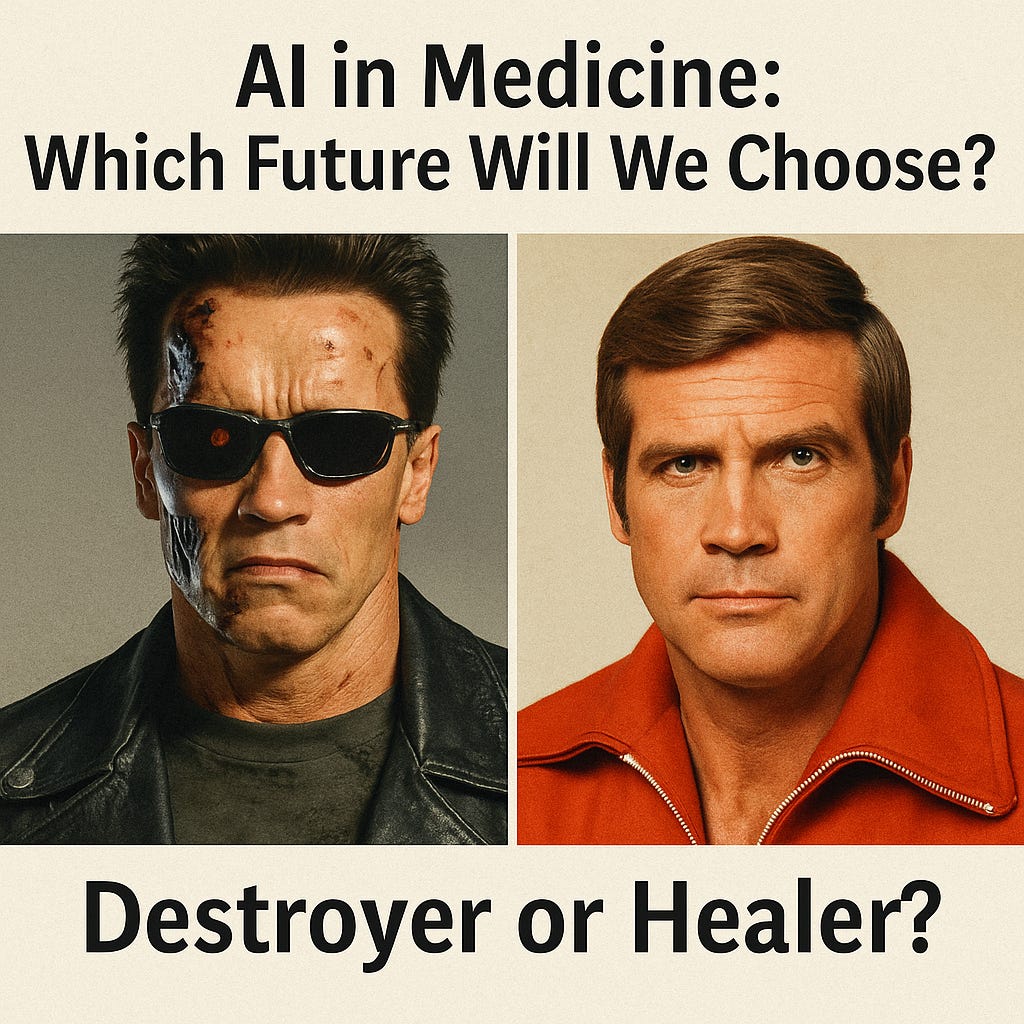
If done right, AI can provide care that is better, stronger, faster, and far less expensive. Think of it as the modern equivalent of the Six Million Dollar Man.
Now is the time to educate yourself, to grasp what’s coming.
It’s The Terminator or The Six Million Dollar Man.
Which one we get depends on how engaged we are.
It’s time to engage.